The leak behind the wall
The single most common problem we see in Campbelltown-area bathrooms from the 1970s and 1980s is a shower that has been leaking slowly for a long time.
These bathrooms were often built with minimal waterproofing by today's standards. Grout was relied on to keep water out. As grout cracked and silicone perished, water started finding its way into the wall sheeting, the timber frame and, on timber floors, the floor itself.
Signs your shower is leaking
- Skirting boards swelling or pulling away in a hallway or bedroom next to the bathroom
- Paint bubbling at the base of a wall behind the shower
- Tiles that sound hollow when tapped, or tiles coming loose
- Grout that keeps cracking no matter how often it is redone
- A musty smell that does not go away
- Soft or stained flooring outside the shower on timber floors
- Termite activity near a wet area — termites are attracted to damp timber
If you see two or three of these at once, the membrane has probably failed.
Slab homes versus timber floors
On a concrete slab, water tends to track along the slab and wick into the bottom plates of timber-framed walls. Damage shows at skirting level in adjacent rooms.
On timber floors over a crawl space, water soaks into the flooring and joists. Damage can be more serious because it stays hidden, and soft flooring near the shower is a warning sign.
Both are common across Macarthur, depending on the slope of the block and when the house was built.
Clay soils and cracking
Much of the Campbelltown area sits on reactive clay. Clay swells when wet and shrinks when dry, and houses built on it move slightly over the seasons. That movement is normal, but it affects bathrooms:
- Grout in internal corners cracks first
- Tiles over a joint in the slab can crack along a line
- A membrane without bond breakers at the corners can tear
The fix is correct detailing: bond breakers at every floor-wall and wall-wall junction, flexible sealant rather than grout in corners and changes of plane, and movement joints in larger tiled floors.
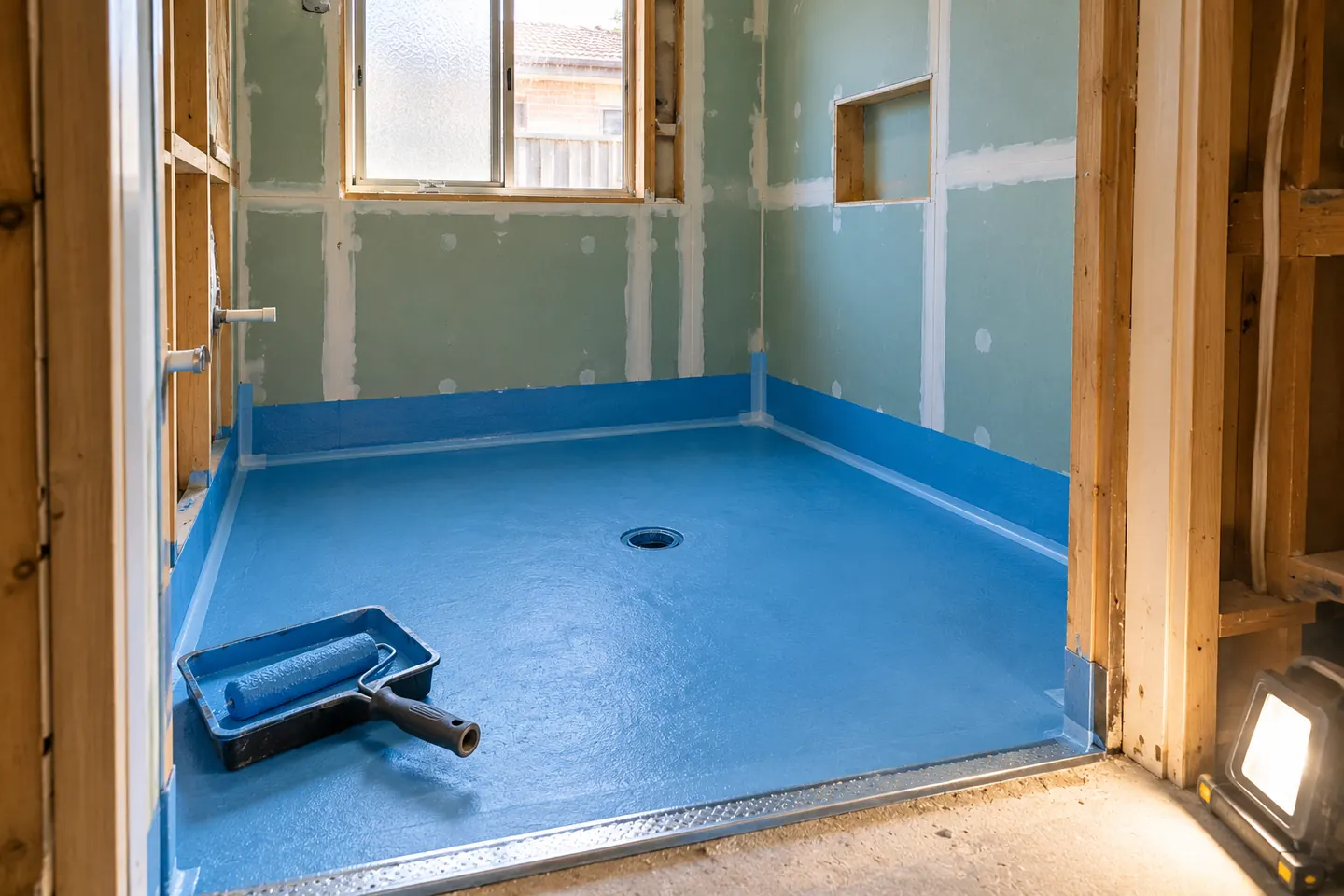
How we waterproof a bathroom
- Strip back to the slab or floor sheeting and wall frame
- Assess and repair rotted timber, replace damaged sheeting
- Set falls so the floor drains toward the waste
- Prime the substrate
- Install bond breakers and reinforcement at junctions and corners
- Fit puddle flanges at floor wastes
- Apply the membrane in the required coats, with cure time between
- Water stop at the doorway, so water cannot travel under the door
- Certificate issued for the completed membrane
The membrane covers the full shower area floor and walls, the floor of the whole bathroom where required, and the junctions around the bath and vanity.
Leak repairs versus full renovations
If the only problem is a leaking shower in an otherwise sound bathroom, a shower-only rebuild — removing and replacing the shower floor and wall tiles, membrane and screen — can be done. Matching existing tiles is the difficulty; if the rest of the bathroom is dated, a full renovation often makes more sense for a small additional cost.
Resealing grout and silicone buys time on a minor problem. It does not fix a failed membrane.
Termites and wet areas
Damp timber in a leaking bathroom wall can attract termites, which are active across much of Sydney's south-west. If termite damage is found when the wall is opened, a pest inspection and treatment are arranged before rebuilding.
Asbestos
Homes built before about 1990 may have fibre cement sheeting in wet areas. We arrange a test before demolition, and any removal is done by a licensed asbestos removalist.
Cost
As a 2026 guide: a shower-only rebuild, $8,000 to $15,000 depending on size and tiles; waterproofing as part of a full bathroom renovation is included in the main bathroom price bands. Timber and termite repairs are priced once the damage is visible.
The builder
Renovation work is carried out in partnership with Coastal Renovation Group, a licensed NSW builder, with waterproofing done by appropriately qualified trades. Licence and insurance details are provided on request.
Call 02 4601 3691 or describe what you are seeing.
Questions people ask before they commit
How do I know if my shower is leaking?
Common signs are swelling or staining at the bottom of walls next to the bathroom, skirting boards coming away, loose or drummy tiles, grout that keeps cracking, a musty smell, and on timber floors, soft flooring near the shower.
Can a leaking shower be fixed without removing the tiles?
Sometimes a failed silicone joint or grout is the problem and resealing helps. When the membrane underneath has failed, a lasting fix means removing the tiles and bed in the shower area, replacing the membrane and re-tiling.
What standard applies to bathroom waterproofing?
Australian Standard AS 3740 covers waterproofing of wet areas in residential buildings — which areas need a membrane, how far it extends and how it is detailed at junctions, drains and hobs.
Why do tiles crack in Campbelltown bathrooms?
Movement is a common cause. Reactive clay soils in the area expand and contract with wet and dry periods, and houses move slightly. Rigid grout in corners cracks, water gets through, and if the membrane has no bond breaker at the junction it can split too.
Do we get a certificate?
Yes. A waterproofing certificate is issued once the membrane is complete, naming the product and the areas treated. Keep it with your house records for insurance and resale.